Dental Bridge vs Implant: The Complete Canadian Comparison
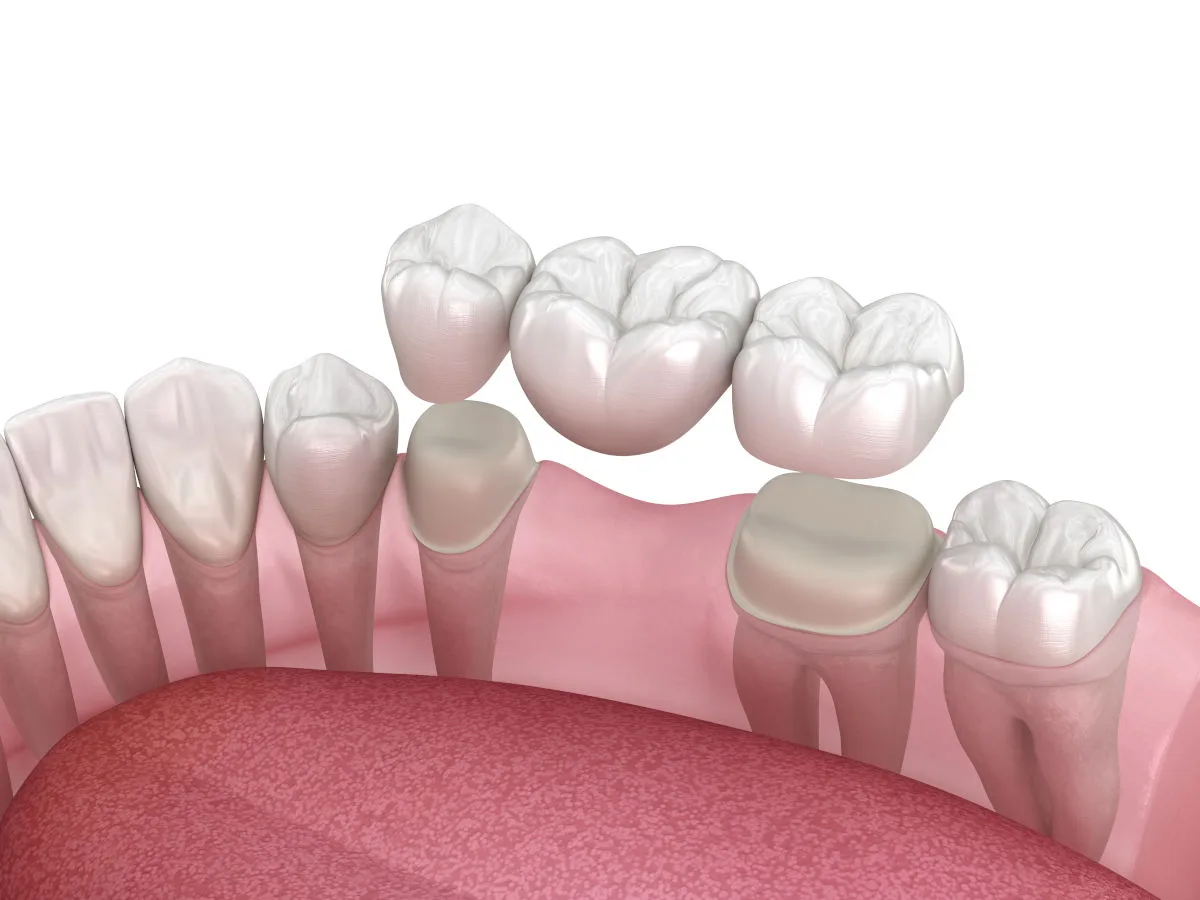
A dental bridge costs less upfront ($2,000 to $5,000 for a standard three-unit bridge in Canada) and is finished in weeks. A dental implant costs more ($3,000 to $6,000) and takes months, but lasts decades, preserves your jawbone, and leaves neighbouring teeth untouched. Over a 20-year horizon, the implant is usually the cheaper option.
That is the summary. The right choice for your mouth depends on your bone, your adjacent teeth, your health, your timeline, and your budget. Here is the complete comparison.
What Each Option Actually Is
A dental bridge replaces a missing tooth by anchoring a false tooth (pontic) to crowns placed on the two neighbouring teeth (abutments). Those healthy neighbours must be ground down to receive their crowns, permanently. No surgery is involved, and the whole process takes two to four weeks.
A dental implant replaces the tooth root itself: a titanium post is surgically placed in the jawbone, fuses with the bone over three to six months, and then carries its own independent crown. Adjacent teeth are not touched. Our types of dental implants guide covers the variations.
Side-by-Side Comparison
| Criterion | Dental bridge | Dental implant |
|---|---|---|
| Upfront cost (Canada) | $2,000 to $5,000 | $3,000 to $6,000 |
| Treatment time | 2 to 4 weeks | 3 to 8 months |
| Surgery required | No | Yes |
| Lifespan | 10 to 15 years | 20+ years, often lifetime |
| Success rate | around 90 to 95 percent | around 95 to 98 percent |
| Effect on adjacent teeth | Two healthy teeth ground down | None |
| Jawbone preservation | No; bone under the gap shrinks | Yes; the post stimulates bone |
| Insurance coverage | More often covered | Less often covered |
| Cleaning | Special flossing under the pontic | Brush and floss like a natural tooth |
The 20-Year Math
Upfront prices mislead, because bridges are consumables and implants are infrastructure.
- Bridge path: $3,000 initial cost, replaced once or twice over 20 years as the bridge wears or an abutment tooth fails. Realistic 20-year total: $7,000 to $12,000, plus any treatment the weakened abutment teeth eventually need.
- Implant path: $4,500 initial cost. The post rarely fails; the crown may need replacement after 15 to 20 years ($1,000 to $1,500). Realistic 20-year total: $4,500 to $6,000.
The younger you are, the more strongly the math favours the implant, because you have more replacement cycles ahead of you.
The Biology Nobody Mentions in the Quote
Two silent processes should influence your decision more than price.
Bone resorption. Your jawbone stays dense because tooth roots stimulate it. Under a bridge's pontic there is no root, so the bone begins shrinking immediately and continues for years. This can eventually create a visible defect under the bridge and change facial contour. An implant is the only replacement option that stops this process, because the titanium post functions as a root.
Abutment tooth sacrifice. Grinding down two healthy teeth removes their protective enamel forever. Those teeth become more vulnerable to decay and fracture over time, and when one of them fails, the whole bridge fails with it. If your neighbouring teeth are pristine, cutting them for a bridge is a genuine cost that never appears on the invoice. If they already carry large fillings or crowns, that objection largely disappears, and a bridge becomes more attractive.
When a Bridge Is the Better Choice
- The adjacent teeth already need crowns anyway
- Your jawbone cannot support an implant and you want to avoid grafting
- Medical conditions make surgery inadvisable
- You need the gap closed within weeks, not months
- Budget is fixed and financing is not an option, or your insurance covers bridges but not implants
- You are replacing two or three adjacent missing teeth and an implant-supported bridge is out of budget
When an Implant Is the Better Choice
- The neighbouring teeth are healthy and intact
- You are under 60 and thinking in decades
- Bone preservation matters to you (it should)
- You want the lowest-maintenance option: an implant is cleaned like a normal tooth, with no special flossing threaders
- You want the lowest total lifetime cost
What About Dentures?
A removable partial denture is the third option, and the cheapest ($1,000 to $3,000). It is also the least stable, accelerates bone loss, and typically needs adjustment or replacement every 5 to 7 years. It works as a budget or transitional solution; for a single missing tooth, most patients who can choose freely pick the implant, then the bridge, then the partial. For full-arch situations, the comparison changes entirely; see our All-on-4 guide.
Insurance and the CDCP
Traditional insurance logic favours bridges: many Canadian plans cover bridges at 50 to 80 percent under major restorative benefits while excluding or limiting implants, and some apply an alternative benefit clause that reimburses implant treatment only at the bridge rate. The Canadian Dental Care Plan follows a similar pattern for eligible Canadians: bridges and extractions fall within covered service categories under defined conditions, while implant coverage is limited. Two practical moves: request a predetermination from your insurer for both options before deciding, and check current CDCP rules at canada.ca. Full coverage and tax credit details are in our implant cost guide.
The Decision Framework
- Are the adjacent teeth healthy? Yes leans implant; already crowned or filled leans bridge.
- Is there enough bone? A CBCT scan answers this. Insufficient bone means grafting (adds cost and time to the implant path) or a bridge.
- What is your time horizon? Under 5 years to a planned full-arch solution: bridge may bridge the gap literally. Decades: implant.
- What does insurance actually pay for each? Get both predeterminations in writing.
- Can you accept 3 to 8 months of treatment? If not, bridge.
Bring these five answers to your consultation and the right option usually becomes obvious. Patients in British Columbia can book that discussion through our Surrey implant page.
Frequently Asked Questions
Is it better to get an implant or a bridge? For a single missing tooth with healthy neighbours and adequate bone, the implant is better on longevity, bone preservation, adjacent tooth protection, and 20-year cost. The bridge wins on speed, upfront price, avoiding surgery, and insurance coverage.
Why would a dentist not recommend a bridge? Most often because the adjacent teeth are perfectly healthy and grinding them down would sacrifice sound tooth structure, or because bone loss under the bridge would create problems later.
What is the average cost of a dental bridge in Canada? A standard three-unit bridge costs $2,000 to $5,000, depending on materials, province, and the condition of the abutment teeth.
How long does a bridge last vs an implant? Bridges last 10 to 15 years on average before replacement. Implant posts routinely last 20 years or more, with only the crown potentially needing replacement after 15 to 20 years.
Does a bridge damage the adjacent teeth? Preparing a bridge requires permanently removing enamel from the two supporting teeth, which increases their long-term vulnerability to decay and fracture. This is the main biological cost of choosing a bridge.
Are implants or bridges covered by Canadian insurance? Bridges are covered more often, typically at 50 to 80 percent under major restorative benefits. Implant coverage is less common and frequently limited by alternative benefit clauses. Request predeterminations for both.
Can I replace a bridge with an implant later? Often yes, but bone loss under the old bridge may require grafting first. If you plan to move to an implant eventually, discuss timing with your dentist, since waiting makes the site worse, not better.
Surrey Dental Implants
Surrey Dental Implants is based in Surrey, British Columbia. See our dental implant services, or return to the dental implant resources hub for the rest of this series.