How Much Do Dental Implants Cost in Canada? Complete 2026 Price Guide
A single dental implant in Canada costs between $3,000 and $6,000, including the implant post, the abutment, and the crown. Full mouth solutions such as All-on-4 run from $20,000 to $30,000 per arch. Your final price depends on your province, the complexity of your case, the materials used, and whether you need preparatory procedures such as a bone graft.
This guide breaks down every cost component, compares prices across provinces, explains what insurance and the Canadian Dental Care Plan actually cover, and shows you legitimate ways to reduce your out-of-pocket expense.
What You Are Actually Paying For
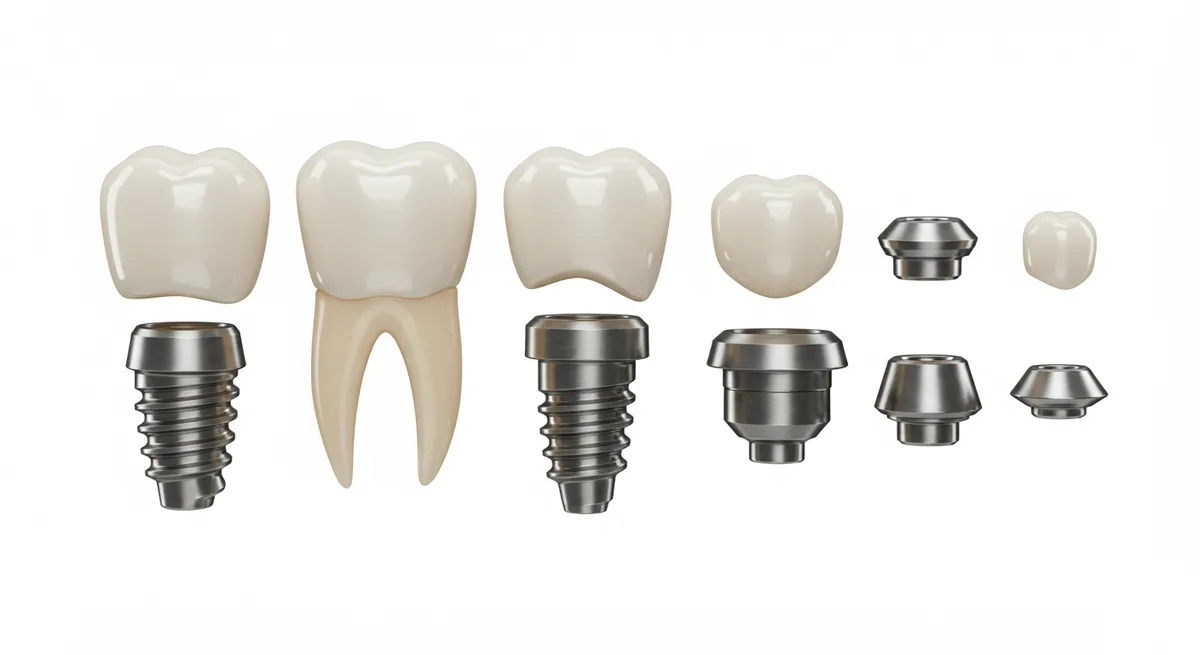
A complete dental implant is three separate components, and quotes that look surprisingly cheap often include only the first one.
The implant post. A titanium (or sometimes zirconia) screw surgically placed in the jawbone. It replaces the missing tooth root and fuses with the bone over several months through a process called osseointegration. On its own, the post typically costs $1,200 to $3,000.
The abutment. The connector piece that attaches the visible tooth to the implant post. Usually $300 to $800.
The crown. The custom-made visible tooth. Porcelain or zirconia crowns typically cost $1,000 to $2,500.
Add diagnostic imaging (3D CBCT scans, usually $150 to $500) and follow-up appointments, and you arrive at the realistic all-in figure of $3,000 to $6,000 for one tooth. When you compare quotes, always confirm whether the number covers the full treatment or only the surgical placement.
Dental Implant Cost by Province
Fees vary meaningfully across Canada. Each province publishes a dental fee guide, but implant pricing is set by individual clinics and specialists.
| Region | Typical cost per complete implant |
|---|---|
| Ontario and Quebec | $3,400 to $5,400 |
| Alberta and British Columbia | $3,500 to $4,900 |
| Manitoba and Saskatchewan | $3,800 to $6,800 |
| Atlantic Canada | $3,600 to $6,100 |
| Canada-wide average | roughly $4,000 to $5,800 |
Urban centres such as Toronto and Vancouver sit at the higher end of their provincial ranges because of higher overhead, while smaller cities and rural clinics often price lower. In Toronto specifically, a complete single implant commonly runs $3,800 to $6,500. In British Columbia, our Surrey implant page sets out local fees for the Fraser Valley.
Costs for Multiple Teeth and Full Mouth Restoration
- Two to three adjacent teeth: an implant-supported bridge typically costs $8,000 to $12,000, which is cheaper than placing one implant per missing tooth.
- All-on-4 (full arch): $20,000 to $30,000 per arch on average, with the full national range spanning $15,000 to $35,000 depending on materials and preparatory work. See our complete All-on-4 guide for the full breakdown.
- Full mouth (both arches): $40,000 to $60,000 or more.
- Implant-retained dentures: a lower-cost full-arch option, typically $6,000 to $15,000 per arch, using two to four implants to stabilize a removable denture.
The 7 Factors That Move Your Price
- Bone grafting. If bone has receded since the tooth was lost, a graft adds $500 to $3,000. A sinus lift for upper back teeth adds $1,500 to $5,000.
- Extractions. Removing a failing tooth before implant placement adds $200 to $600 per tooth.
- Materials. Zirconia components add $500 to $1,000 over standard titanium.
- Who performs the surgery. Oral surgeons and periodontists typically charge more than general dentists with implant training, reflecting additional specialty training.
- Technology. Guided surgery with 3D planning improves precision and may add to the fee.
- Sedation. Local anesthesia is included; IV sedation adds $500 to $1,500.
- Geography. As shown above, the same treatment can differ by more than $2,000 between provinces.
Does Insurance Cover Dental Implants in Canada?
This is the question Canadians ask most, and the honest answer is: partially, sometimes.
Private dental plans. Most Canadian workplace plans classify implants as a major restorative service. Coverage varies widely: some plans exclude implants entirely, others reimburse 50 percent of eligible costs up to the plan's annual maximum. Since annual maximums commonly sit between $1,500 and $5,000, even a generous plan usually covers only a fraction of a $5,000 procedure. Some plans apply an "alternative benefit clause," reimbursing the cost of the cheapest adequate treatment (often a bridge or partial denture) even if you choose an implant.
Before committing, ask your insurer for a pre-treatment estimate (predetermination). Your dental office can submit this for you, and it tells you in writing exactly what your plan will pay.
Provincial health plans. OHIP, MSP, RAMQ, and other provincial plans do not cover dental implants, which are considered elective.
The Canadian Dental Care Plan (CDCP). The CDCP covers a defined basket of services for eligible Canadians based on family income. Coverage for implants under the CDCP is limited; some related services such as extractions or dentures may be covered for eligible patients. Confirm current eligibility and covered services directly at canada.ca, as the program's coverage rules evolve.
Social assistance programs. Programs such as ODSP in Ontario generally cover basic dental care rather than implants, though exceptional funding pathways exist in limited medical circumstances.
The Tax Credit Most Patients Miss
Dental implants qualify as an eligible medical expense for the federal Medical Expense Tax Credit. If your total eligible medical expenses exceed the annual threshold (the lesser of 3 percent of your net income or the indexed dollar limit), you can claim the excess. On a $5,000 implant, this commonly translates into several hundred dollars of tax relief, and more when combined with other medical expenses in the same 12-month period. Keep your receipts and ask your accountant.
6 Ways to Pay Less for Dental Implants
- University dental schools. Faculties of dentistry (Toronto, UBC, McGill, Dalhousie, Alberta, and others) offer implant treatment performed by supervised residents at 30 to 50 percent below private rates. Waiting lists apply.
- Get multiple quotes. Implant fees are not standardized. Two clinics in the same city can differ by $1,500 for the same treatment.
- Ask for an itemized treatment plan. It lets you compare quotes on equal terms and spot padding.
- Phased treatment. Placing the implant now and the final crown after healing spreads the cost across two calendar years, which can also let you use two years of insurance maximums.
- Financing. Most implant clinics offer monthly payment plans, either in-house or through third-party healthcare lenders.
- Claim the tax credit. As above.
A word on dental tourism. Implants in Mexico or overseas can cost 50 to 70 percent less, but complications, warranty issues, and follow-up care fall entirely on you. If an implant placed abroad fails, Canadian dentists start the diagnostic process from zero, and corrective treatment often erases the savings. If you consider it, verify the clinician's credentials, the implant brand used, and who handles complications after you fly home.
Why Are Dental Implants So Expensive?
Four reasons: the components themselves are precision-manufactured medical devices; placement requires surgical training, 3D imaging, and sterile protocols; the crown is custom-fabricated by a dental laboratory; and treatment spans multiple appointments over three to eight months. Unlike a filling, an implant is a surgical reconstruction, and it is priced like one.
The counterweight is longevity. A well-maintained implant lasts 20 years or more and often for life, while bridges typically need replacement every 10 to 15 years. Measured per year of service, implants are frequently the cheapest option available.
Frequently Asked Questions
How much is one dental implant in Canada? A complete single implant (post, abutment, and crown) costs $3,000 to $6,000. Quotes below $2,000 usually cover only the surgical post.
Are dental implants covered by insurance in Canada? Sometimes, partially. Many private plans reimburse a portion under major restorative coverage, capped by your annual maximum. Provincial health plans do not cover implants. Always request a predetermination before treatment.
Does the CDCP cover dental implants? CDCP coverage for implants is limited. Related services may be covered for eligible patients. Check current rules at canada.ca.
Are dental implants tax deductible in Canada? They qualify as an eligible medical expense for the Medical Expense Tax Credit, which reduces your federal tax when total medical expenses exceed the annual threshold.
How much do full mouth dental implants cost in Canada? All-on-4 treatment averages $20,000 to $30,000 per arch. Restoring both arches typically costs $40,000 to $60,000.
Why is there such a big price difference between clinics? Fees reflect the clinician's training, the technology used, laboratory quality, the implant brand, and local overhead. Cheaper is not automatically worse, but always compare itemized treatment plans, not headline numbers.
How can I get cheaper dental implants in Canada? University dental school clinics offer supervised treatment at 30 to 50 percent below private fees. Comparing quotes, phasing treatment across insurance years, and claiming the medical expense tax credit also reduce the real cost.
Is a cheap implant abroad worth it? The upfront savings are real, but follow-up care, warranty, and complication management become your problem. Factor in travel, lost work time, and the cost of fixing failures before deciding.
Surrey Dental Implants
Surrey Dental Implants is based in Surrey, British Columbia. See our dental implant services, or return to the dental implant resources hub for the rest of this series.