Screwless Dental Implants: What They Really Are, and Whether You Need One
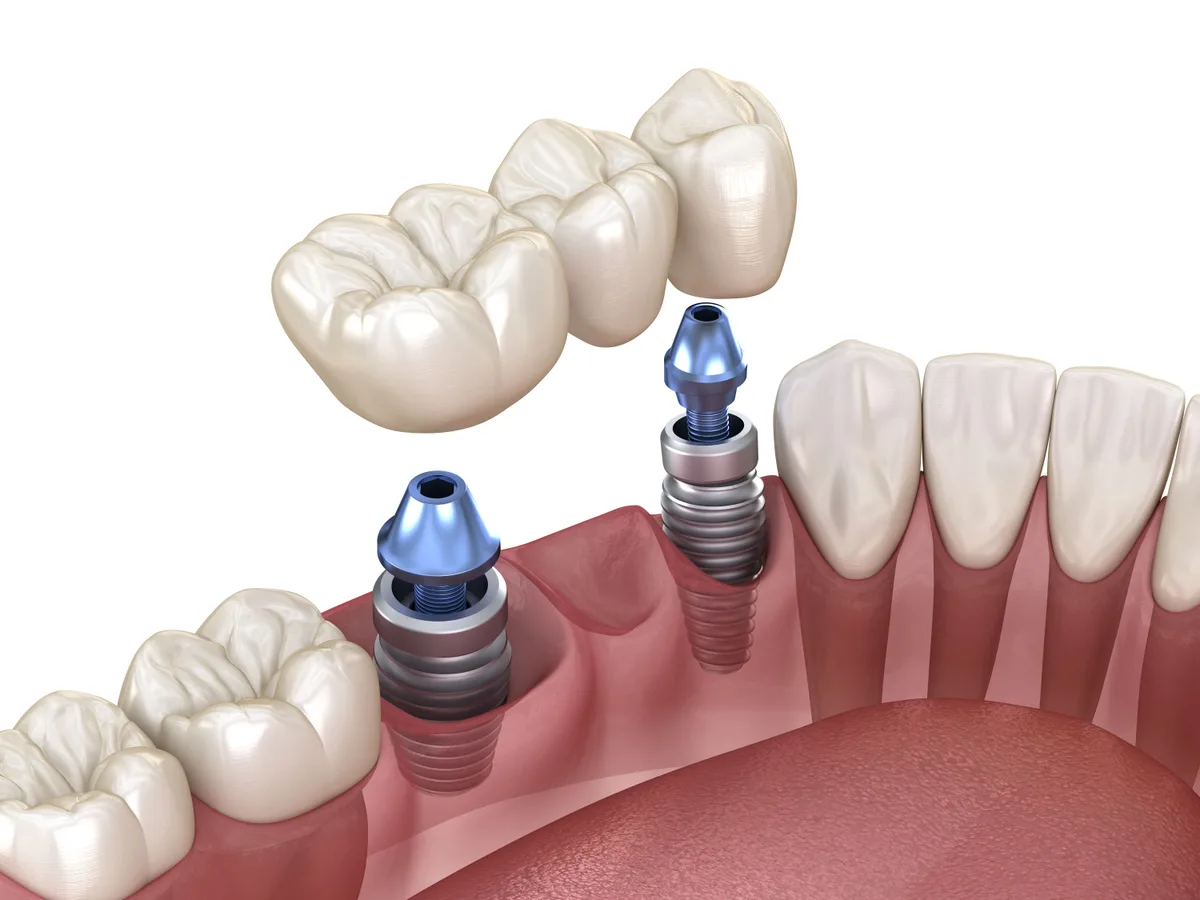
"Screwless dental implants" is one of the most searched and most misunderstood terms in implant dentistry. Here is the honest version: almost every dental implant still involves a titanium post placed in your jawbone. What "screwless" actually refers to is how the visible tooth attaches to that post. Two technologies carry the label: cement-retained crowns and locking taper (friction-fit) systems.
This guide explains both, compares them against traditional screw-retained restorations, and gives you the durability data and Canadian costs to discuss options intelligently with your dentist.
First, What "Screwless" Does Not Mean
The implant post itself is threaded and is placed into the bone by rotation in nearly all systems, including so-called screwless ones. No mainstream implant floats freely in the jaw. When clinics advertise screwless implants, they mean one of two things about the connection between the post and the crown:
- Cement-retained restoration: the crown is bonded to the abutment with dental cement instead of being fastened with a small internal screw.
- Locking taper (Morse taper) systems: the abutment is joined to the implant by a precision friction fit, a cold-weld connection with no connecting screw at all. Bicon is the best-known system in this category. The three surgical implant types and every restoration configuration are compared in our types of dental implants guide.
How Each Attachment Method Works
Screw-retained (the traditional standard). A small screw passes through the crown and abutment into the implant. The access hole is sealed with tooth-coloured filling material. If anything needs adjustment or repair, the dentist unscrews the crown in minutes.
Cement-retained ("screwless"). The abutment attaches to the implant, and the crown is cemented onto the abutment exactly like a crown on a natural tooth. No access hole, so the crown surface is flawless.
Locking taper ("truly screwless"). The abutment stem is tapped into a precisely machined socket in the implant. Friction creates a bacterial-seal connection with no screw to loosen, ever. These systems often use shorter, wider implants, which can help patients with reduced bone height avoid grafting.
Pros of Screwless Systems
- Superior aesthetics. No access hole means an uninterrupted porcelain surface. This matters most on front teeth, where a filled screw channel can be visible.
- No screw loosening. Screw loosening is one of the most common minor complications of traditional restorations. Cemented and locking taper connections eliminate that specific failure mode.
- Flexible positioning. When the implant angle would force a screw channel to exit through the visible face of the crown, cementing solves the problem elegantly.
- Strong survival data. Locking taper systems report survival rates comparable to or better than screw-retained systems: clinical studies show figures in the 95 to 98 percent range over long follow-up, including in patients with reduced bone volume.
Cons You Should Weigh
- Harder to remove. A cemented crown cannot simply be unscrewed. If it needs replacement or the implant needs attention, removal is more involved (though entirely doable).
- Cement residue risk. Excess cement left under the gum during placement can trigger inflammation around the implant (peri-implantitis). Meticulous technique and radiographic verification are the safeguards; this is a clinician-skill variable, so ask about it.
- Technique sensitivity. Locking taper systems demand specific training and extremely tight tolerances. Choose a clinician experienced with the exact system being proposed.
- Not universal. Some anatomical and bite situations are still better served by screw-retained restorations, particularly where planned retrievability matters (as in full-arch bridges, which are almost always screw-retained precisely so they can be removed for maintenance).
Screwless vs Screw-Retained: The Comparison Table
| Criterion | Screw-retained | Cement-retained | Locking taper |
|---|---|---|---|
| Visible access hole | Yes (filled) | No | No |
| Retrievability | Excellent | More involved | More involved |
| Screw loosening risk | Present | Reduced | Eliminated |
| Cement residue risk | None | Present | None |
| Best suited for | Molars, full arches | Front teeth, aesthetics | Short-bone cases, aesthetics |
| Track record | Decades | Decades | Decades (system dependent) |
Do Screwless Implants Cost More in Canada?
The attachment method itself is a minor cost variable. Complete single-implant treatment lands in the same $3,000 to $6,000 range whichever connection is used; custom aesthetic abutments for cemented front-tooth cases can add a few hundred dollars. The bigger cost drivers remain bone grafting, materials, and geography, all covered in our Canadian implant cost guide. Note one indirect saving with locking taper short implants: by working in reduced bone height, they sometimes eliminate a $1,500 to $5,000 grafting step.
Who Should Consider a Screwless Restoration?
- Front tooth replacement where a flawless crown surface is the priority.
- Patients with reduced bone height exploring short locking taper implants as an alternative to grafting.
- Anyone whose implant angle would place a screw channel in a visible position.
And who should not insist on it: full-arch cases (retrievability wins), and anyone whose dentist recommends screw retention for a specific mechanical reason. The attachment method is a clinical decision with trade-offs, not an upgrade tier. To discuss which suits your case, see our Surrey implant centre.
The Procedure: Identical Where It Counts
Whichever attachment you end up with, the treatment path is the same: 3D imaging and planning, surgical placement of the post, three to six months of osseointegration, then attachment of the abutment and crown. The screwless choice affects only the final restorative step. Recovery, success rates, and aftercare follow the same rules as any implant, and daily hygiene remains the single biggest factor you control.
Frequently Asked Questions
What are screwless dental implants? Implant restorations where the crown attaches without a retaining screw, either bonded with dental cement or joined by a precision friction-fit (locking taper) connection. The implant post itself is still placed in the jawbone.
Are screwless dental implants any good? Yes. Cement-retained restorations have decades of clinical use, and locking taper systems report survival rates of 95 to 98 percent in long-term studies, comparable to traditional screw-retained implants.
Are screwless implants cheaper? Not meaningfully. Complete treatment costs $3,000 to $6,000 in Canada regardless of attachment method. Short locking taper implants can save money indirectly when they eliminate the need for bone grafting.
How do screwless implants stay in your mouth? Cement-retained crowns are bonded to the abutment with strong dental cement. Locking taper systems hold through a cold-weld friction fit machined to extremely tight tolerances. Both are fixed, permanent connections.
Are screwless dental implants painful? The surgical experience is identical to any implant: local anesthesia during placement, mild to moderate discomfort for a few days after. The attachment method makes no difference to pain.
Which is better, screwless or screw-retained? Neither is universally better. Screwless wins on front-tooth aesthetics and eliminates screw loosening; screw-retained wins on easy retrievability and is standard for full-arch work. Your anatomy and the tooth's position should drive the choice.
Surrey Dental Implants
Surrey Dental Implants is based in Surrey, British Columbia. See our dental implant services, or return to the dental implant resources hub for the rest of this series.